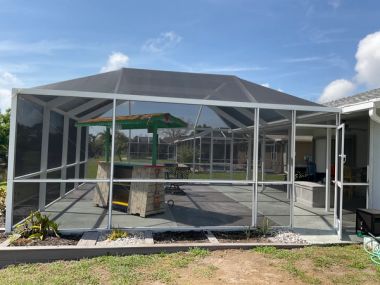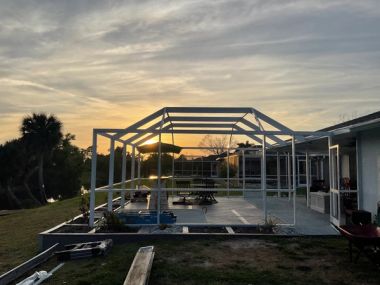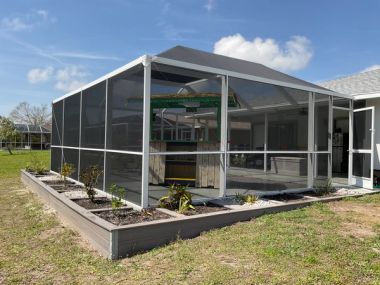


Adding a Screen Enclosure to an Existing Pool in Florida
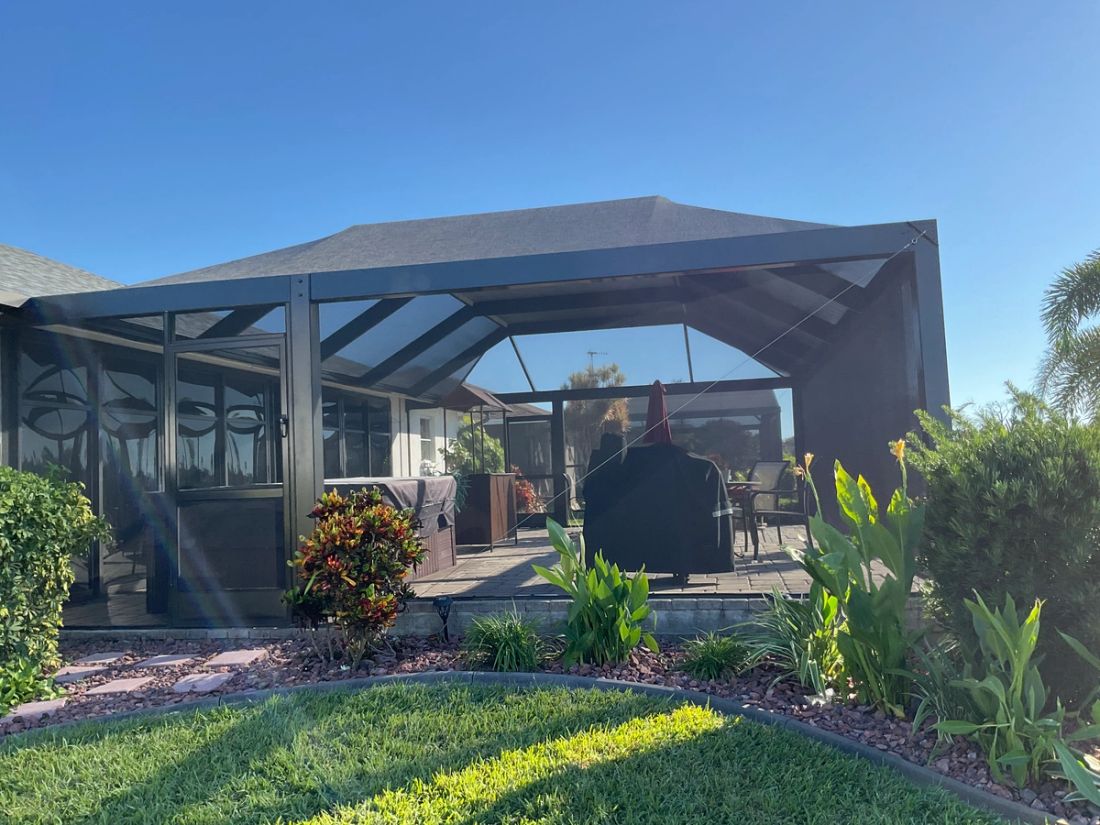
Want to add a screen enclosure to an existing pool that has no cage? Here is how the deck evaluation, enclosure styles, concrete anchoring and permitting work across South Florida.
Yes, you can add a screen enclosure to an existing pool in most South Florida backyards. A pool screen enclosure, or pool cage, is an aluminum frame and mesh structure built around a finished pool. To enclose an existing pool, a contractor evaluates the deck slab, sets concrete footers and anchors the frame to the engineered Florida Building Code wind loads required for your specific address.
Can You Add a Pool Cage to a Pool That Has None?
In most cases, yes. Building a pool cage for an existing pool is a routine retrofit across Miami-Dade, Broward and Palm Beach. The pool itself does not change; the work happens on and around the surrounding deck, so the existing water, finish and equipment stay in place.
The deciding factor is rarely the pool and almost always the deck. A pool screen enclosure transfers wind and uplift loads into the concrete it is anchored to, so the slab around your pool has to be sound and wide enough to carry the new frame.
How Contractors Evaluate Your Existing Deck and Footers
The first site visit is an assessment, not a sales pitch. The crew measures the deck, checks its condition and confirms there is enough clear perimeter to land the enclosure beams without crowding the waterline or your screen door swing.
What Gets Checked on the Slab Before Installation
Inspectors look at slab thickness, cracking, settling and how far the concrete extends past the coping. A thin or spalling deck may need new footers cut in and poured so the anchors reach engineered concrete instead of a decorative topping.
They also note drainage, screws into existing pavers, and whether a paver deck needs footers beneath it. Pavers alone do not hold a cage; the frame must tie into a structural slab or dedicated footings below the surface.
When the Pool Deck Needs Repair Work First
If the slab is undersized, the honest answer is that deck work comes before any aluminum. Adding footings or extending the existing deck is common on older homes in Coral Gables and Palmetto Bay, where pools often predate today's enclosures by decades.
Which Pool Enclosure Styles Fit an Existing Pool?
Most roof styles can be retrofitted; the right one depends on your roofline, screen-room height goals and budget. The four common shapes each clear water and debris differently and change how open the finished space feels.
Mansard enclosures angle the roof edges inward and read clean against single-story homes. Hip roofs slope on all sides for a low profile, while gable styles peak in the center for extra headroom over a larger pool.
Dome enclosures arch high overhead and suit deep or oversized pools where you want an airy, open feel. A contractor matches the style to your house line so the addition looks original, not bolted on after the fact.
How Is the Frame Anchored to the Concrete?
Anchoring is the heart of a safe retrofit. Aluminum uprights are fastened to the slab or footers with engineered concrete anchors, spaced and sized according to the structural drawings for your wind zone.
The base plates, fastener type and embedment depth are not guesswork. They follow the engineering for the enclosure, which is exactly why the stamped permit set and the field installation have to match each other.
Permits, Code and Wind Load (the Honest Version)
A pool screen enclosure is a permitted structure in South Florida, and enclosing an existing pool is no exception. Your project is engineered to the Florida Building Code, and in Miami-Dade County to the High-Velocity Hurricane Zone (HVHZ) wind load requirements.
Specific ratings depend on the structure type, size and attachment, so no contractor should promise a cage is hurricane-proof. What we can promise is a permitted, inspected enclosure engineered to the loads your address requires.
Pool barrier and safety codes also apply here. In many jurisdictions the enclosure and its self-closing, self-latching door can serve as part of the required pool safety barrier, which an inspector confirms during plan review.
What Are the Benefits of Enclosing an Existing Pool?
The payoff shows up the first week. A pool cage keeps leaves, lovebugs, frogs and windblown debris out of the water, which cuts skimming time and eases the load on your filter and pool chemicals.
It also adds an insect-screened buffer against mosquitoes and no-see-ums during South Florida summers, and it provides a measure of safety by limiting unsupervised access to the pool area for children and pets.
Reasons Homeowners Add a Cage After the Pool
- Far less daily skimming of leaves and debris
- Relief from mosquitoes, lovebugs and no-see-ums
- An added safety barrier around the water
- Lower chemical and filter strain over time
- Shade and UV reduction with the right mesh
- Cleaner deck surfaces and less algae growth
- A defined, finished outdoor living space
- Protection for pool equipment and furniture
- Added resale appeal for South Florida buyers
The Step-by-Step Process to Enclose Your Pool
From first call to final inspection, a retrofit follows a clear path. Every project includes a custom 3D design so you can walk through the enclosure before we cut a single piece of aluminum.
- Free 3D design consultation at your home to measure the pool and deck.
- Deck and footer assessment to confirm the slab can carry the frame.
- 3D rendering and real quote from the design, not a brochure estimate.
- Engineering and permit submittal to your city or county building department.
- Footer and anchor work if the existing deck needs reinforcement.
- Frame assembly and screening by our own in-house crew.
- Final inspection to close out the permit.
How Long Does an Add-On Enclosure Take?
Timelines vary by permitting jurisdiction and whether deck work is needed first. Coral Springs, Parkland and Boca Raton in Broward and Palm Beach often differ from Miami-Dade on review times, which we map out for you up front.
Budgeting the project? See our South Florida pool enclosure cost guide for 2026 and the Miami-Dade wind load and permit rules for pool enclosures. Ready to plan it? Schedule My Free 3D Design Consultation — (786) 383-6066 (English) / (786) 340-5157 (Español).
Frequently Asked Questions About Adding a Pool Enclosure
Can I add a screen enclosure to an existing pool?
In most South Florida backyards, yes. The pool stays as is; the enclosure is built on and anchored to the surrounding deck, provided the slab is sound and wide enough to carry the frame.
Does my pool deck need to be replaced first?
Not always. If the slab is thick and in good condition, the cage anchors directly to it. Thin, cracked or paver-only decks may need footers added before installation, which the assessment confirms.
Is an added pool cage engineered for hurricanes?
It is engineered to the Florida Building Code and, in Miami-Dade, to HVHZ wind loads. No enclosure is hurricane-proof; the specific rating depends on size, attachment and the structure type for your address.
Do I need a permit to enclose an existing pool?
Yes. A pool screen enclosure is a permitted structure across Miami-Dade, Broward and Palm Beach. We pull the permits, schedule inspections and install with our own crew.
Which enclosure style works best for a retrofit?
Mansard, hip, gable and dome can all be retrofitted. The best fit depends on your roofline, pool size and headroom goals, which we render in 3D so you can compare before deciding.
Ready to Enclose Your Existing Pool?
We handle the design, permits and installation as one accountable team, so you deal with a single contractor from the first sketch through the final inspection. We render the enclosure in 3D and quote real numbers from that design.
To learn how a pool screen enclosure installation in South Florida would work for your backyard, schedule a visit. You can also compare options with our guide to patio screen rooms across South Florida.
Schedule My Free 3D Design Consultation today. Call (786) 383-6066 (English) or (786) 340-5157 (Espanol) to book your free 3D design and a deck assessment for adding a screen enclosure to your existing pool.