
Louvered Roof Brands: What to Look for in a Florida System
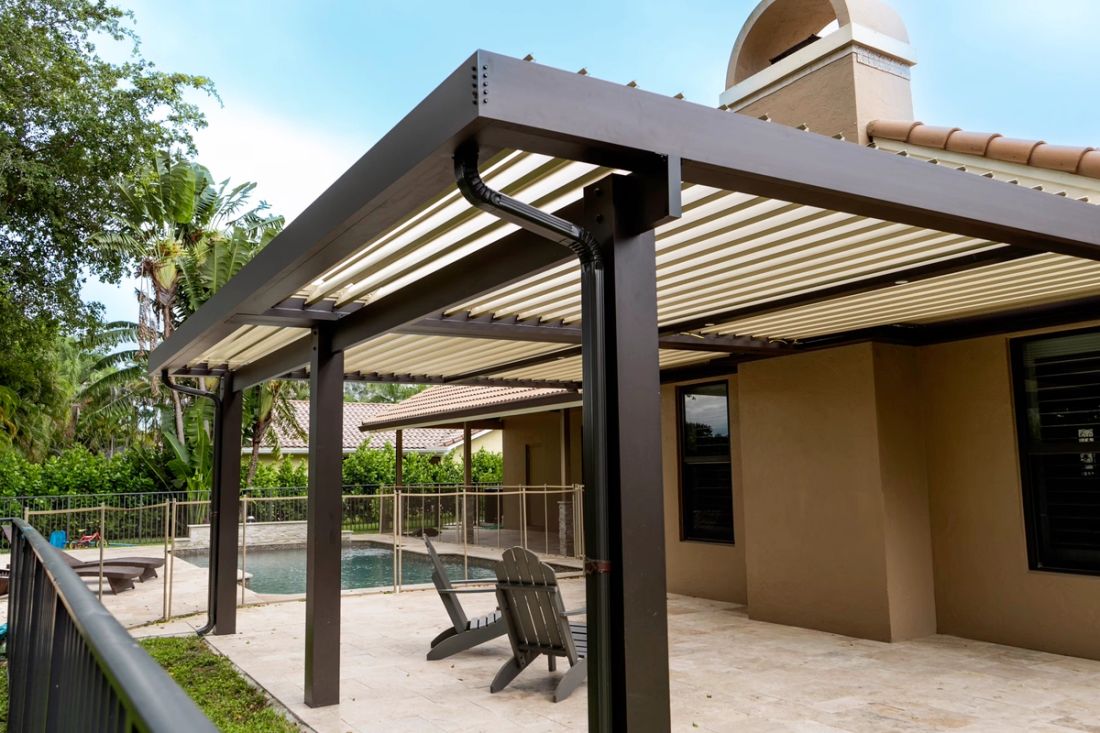
Choosing a louvered roof in South Florida? Skip brand hype and compare what matters: NOA approval, wind-load rating, aluminum gauge, motor, warranty and integrated drainage.
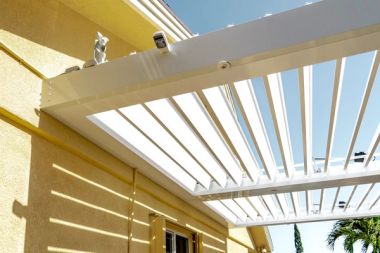
Florida adjustable roof systems are motorized louvered roofs whose aluminum blades pivot open for sun and close tight against rain. In South Florida, the brand name matters less than the build. What you really want to compare is Miami-Dade NOA approval, documented wind-load engineering, marine-grade aluminum, a sealed motor, integrated drainage, and a licensed crew that pulls the permit and installs it.
Why the Brand Name Isn't the Real Question
Several reputable louvered roof brands compete in the market, and a good installer can work with more than one. Two systems with similar marketing can perform very differently once a summer storm rolls off the Atlantic, and the build decides that, not the logo.
So instead of asking which brand is best, homeowners in Miami-Dade and Broward County get further by asking what a Florida-rated system actually needs to have. The criteria below are the checklist to bring to every louvered roof quote.
Miami-Dade NOA Approval: The First Filter
A Notice of Acceptance (NOA) is a product approval issued through Miami-Dade County confirming a product was tested to local standards. For a louvered roof, an NOA covers the system and its attachment details, and it's the first thing a plans examiner checks.
Ask for the NOA number tied to the exact system being quoted, including your spans. Even outside Miami-Dade, an NOA is useful shorthand for an independently tested product, so homes in Broward and Palm Beach County still benefit from it.
Wind Load and the HVHZ Nuance in South Florida
Outdoor aluminum structures here are engineered to the Florida Building Code and, in Miami-Dade County, to the High-Velocity Hurricane Zone (HVHZ) wind load requirements. That framework is what a Florida-rated louvered roof is designed around.
Honestly, the specific rating a system achieves depends on the structure type, size, attachment and add-ons like screens or heaters. No louvered roof is fully storm-proof, and a brochure number is not the same as engineering stamped for your footprint.
Questions That Reveal Real Wind Performance
When you compare brands, ask how the blades lock when closed, how the frame attaches to the house or footings, and whether the quote includes engineering stamped for your span. Those answers tell you more than a headline wind rating.
Build Quality: Aluminum, Finish, Motor and Controls
South Florida's salt air is hard on metal, and the material spec is where cheaper systems quietly cut cost. Compare the aluminum alloy and gauge of the blades and frame, since thicker, marine-grade extrusions resist deflection and corrosion near the coast.
The finish matters just as much. A quality powder-coat coating, baked on rather than sprayed thin, protects the aluminum from UV fade and salt. Ask about the finish warranty and whether the color is true powder-coat or a lower-grade paint.
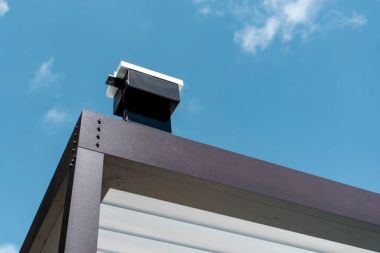
On a motorized louvered roof, the motor is the part you use most. Look for a sealed, weather-rated motor covered separately under the warranty. Smart controls add app or remote operation plus rain and wind sensors that close the blades automatically.
Smart Add-ons Worth Comparing Between Brands
Beyond the roof, compare extras like integrated LED lighting, ceiling fans, and gas or electric heaters. Not every brand supports every add-on, so if you want a fan or heater, confirm it's compatible before you sign.
Water Management and the Installer Behind It
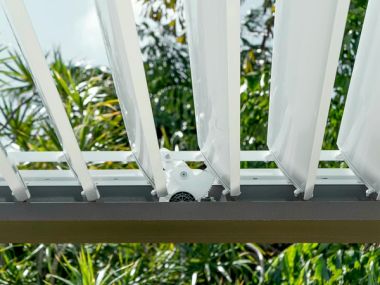
A louvered roof's whole promise is keeping rain out, then draining it away cleanly. Better systems route water through internal channels and down the support columns, so runoff doesn't sheet onto your patio or guests. Ask where the water goes when the blades close.
Even a top-tier system underperforms with a sloppy install, because the crew sets the slope, seals attachments and wires the controls. That's why a licensed, in-house installer is as important as the brand stamped on the frame.
AB Aluminum & Screens is licensed and insured with 15+ years of experience, and we design, permit and install with our own crew. Every project starts with a free 3D design, so you can compare systems with real numbers, plus financing through Synchrony Bank.
Ready to see the difference on your own patio? Schedule My Free 3D Design Consultation and our team will walk you through these criteria on a 3D render of your space before you commit to any brand.
Your Louvered Roof Comparison Checklist
Bring this list to every consultation. If a brand or installer can't answer these clearly, treat it as a flag. Each point maps to how the system holds up across Miami-Dade, Broward and Palm Beach County.
- NOA number matching the exact system and span quoted
- Engineering stamped to the Florida Building Code and HVHZ
- Aluminum alloy and gauge of the blades and frame
- Baked powder-coat finish with a stated warranty
- Sealed, outdoor-rated motor with its own warranty
- Rain and wind sensors plus app or remote control
- Add-ons supported: lighting, fans, gas or electric heaters
- Integrated drainage routed through the support columns
- How the blades lock in the closed, storm-ready position
- A licensed, insured contractor who permits and installs in-house
Comparison Table: What to Compare and Why
Use the table below to score any system you're considering. It focuses on criteria, not brand names, so you can line up two or three quotes from Weston to Pinecrest and see where they really differ.
CriterionWhat to Look ForWhy It Matters in South FloridaNOA approvalCurrent Miami-Dade NOA matching the systemRequired to permit; proves local testingWind-load engineeringStamped design for your spanHVHZ exposure; rating depends on attachmentAluminum gaugeMarine-grade alloy, heavier extrusionsResists corrosion and deflection in salt airFinishBaked powder-coat with warrantyFights UV fade and coastal corrosionMotorSealed, outdoor-rated, warrantedDaily-use part most exposed to weatherControlsApp or remote plus rain/wind sensorsAuto-closes during afternoon stormsWater managementDrainage concealed in the columnsKeeps runoff off the patioInstallerLicensed, insured, in-house crewInstall quality decides performance
Frequently Asked Questions
Are louvered roofs allowed in Miami-Dade County?
Yes, when the system carries a valid Miami-Dade NOA and is engineered and permitted to the Florida Building Code, including HVHZ wind loads where they apply. A licensed installer confirms the right approvals and pulls the permit for your project.
Do all louvered roof brands have a Florida wind rating?
No. Wind performance varies by product line and configuration, and the achievable rating depends on size, span and attachment. Always ask for the NOA number and stamped engineering for the exact system quoted, not a general brochure figure.
What features should a motorized louvered roof include?
Look for a sealed outdoor-rated motor, rain and wind sensors, app or remote control, integrated drainage in the columns, and a marine-grade aluminum frame with a baked powder-coat finish. Optional add-ons include LED lighting, fans and heaters.
How is a louvered roof different from a standard pergola?
A standard aluminum pergola has a fixed roof or open slats, while a louvered roof has motorized blades that pivot to control sun and seal out rain. Compare both options for your patio during a free 3D design consultation with our team.
Which louvered roof brand does AB Aluminum & Screens install?
We focus on matching your project to a Florida-rated system that meets NOA, wind-load and material standards, rather than pushing one label. The priority is a system engineered, approved and installed correctly for South Florida conditions.
Schedule My Free 3D Design Consultation
Comparing adjustable patio roof options in Miami-Dade, Broward or Palm Beach County? Click Schedule My Free 3D Design Consultation, or call (786) 383-6066 (English) or (786) 340-5157 (Espanol) to weigh the criteria that matter before any aluminum is cut.
Want to dig deeper first? See our louvered roof system guide for how these systems work, then explore our aluminum pergola options to compare every outdoor structure for your patio.