
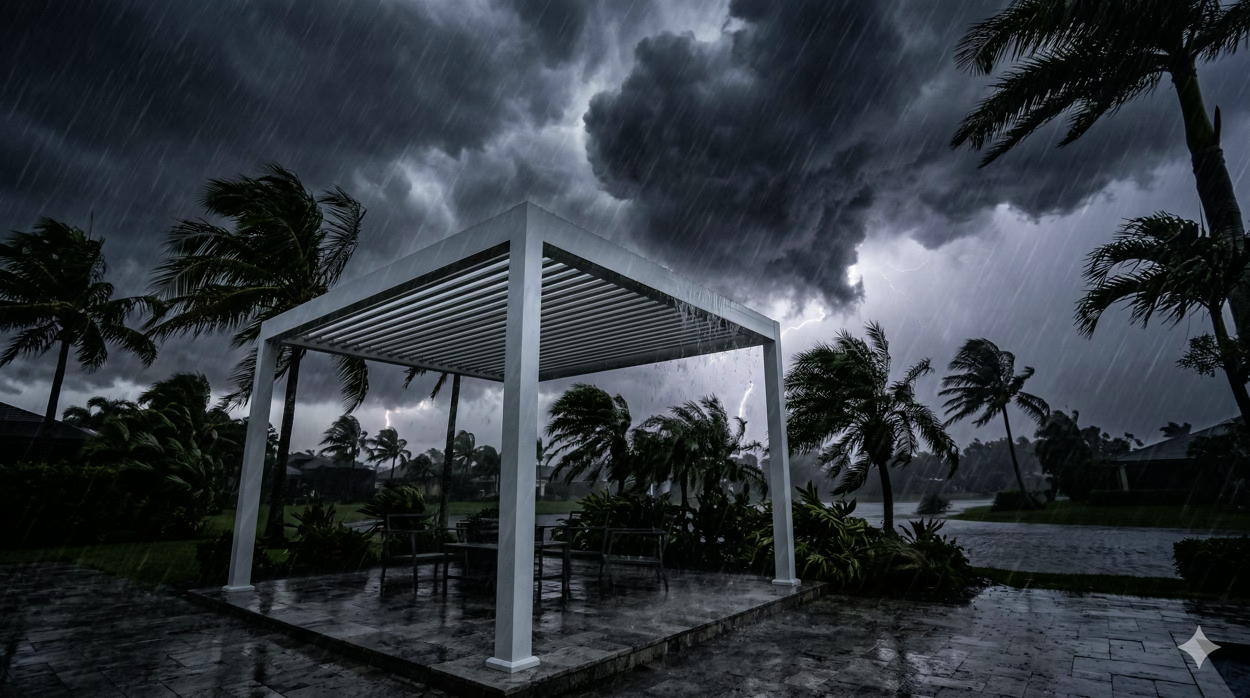
It's the question every South Florida homeowner asks before investing in an outdoor structure: what happens to my pergola during a hurricane? It's a completely legitimate concern — and one that deserves an honest, detailed answer rather than a vague reassurance. So let's talk about it directly.
The short answer: a professionally designed, engineered, permitted, and installed aluminum pergola in South Florida can withstand significant wind events — including many tropical storms and Category 1 hurricanes — when built to the correct specifications. A cheap, unpermitted, or improperly installed structure cannot.
The difference between those two outcomes comes down entirely to whether your pergola was designed and built to meet Florida's building codes — specifically Miami-Dade County's wind load requirements, which are among the strictest in the country.
After Hurricane Andrew devastated South Florida in 1992, Florida completely overhauled its building codes. Today, the Florida Building Code — and particularly Miami-Dade County's standards — requires that all permanent structures be engineered to withstand specific wind speeds depending on the location.
For most of Miami-Dade County, the design wind speed for permanent structures is 175 mph or higher. This means that a properly permitted pergola in Miami-Dade must be structurally engineered and built using materials with a Florida Product Approval (FPA) or Miami-Dade Notice of Acceptance (NOA) to demonstrate they meet these standards.
Key requirements for a hurricane-rated pergola in South Florida include:
Here's where we have to be direct: if a contractor installs your pergola without pulling a building permit, your structure has almost certainly not been engineered to meet Florida's wind load standards. This means:
Working with a licensed contractor who pulls a permit for your pergola isn't just a bureaucratic formality. It's the mechanism by which your structure gets independently verified as safe and compliant.
Material choice matters enormously in Florida's hurricane environment. Here's why aluminum outperforms wood for hurricane resistance:
When a contractor tells you their pergola is "hurricane proof" or "hurricane resistant," here's what to ask:
Any reputable licensed contractor in South Florida will answer all of these questions clearly and affirmatively. If a contractor is vague, discourages you from pulling a permit, or can't provide product approval documentation, that's a significant red flag.
At AB Aluminum & Screens, every pergola, screen enclosure, and outdoor structure we install is built to meet South Florida's building code requirements. That means:
Yes. Even a properly engineered and permitted pergola benefits from pre-hurricane preparation. Remove any loose accessories, furniture, planters, or decorative items from the structure and surrounding area. Retract any motorized screens or awnings. For louvered roof systems, close the louvers. The structure itself is designed to handle the wind — but loose items around it can become projectiles.
This depends on your specific location within South Florida. Miami-Dade County requires structures to be designed for 175+ mph wind speeds in most areas. Broward County requirements vary by zone. Your contractor should confirm the design wind speed for your specific address.
A properly permitted pergola is typically eligible for coverage under your homeowner's insurance as a permanent structure. Coverage specifics vary by policy — consult your insurance provider for details about your specific coverage.
Your pergola should be an asset to your home for 20+ years — not a liability when the next hurricane approaches. Build it right the first time with licensed contractors who pull permits, use code-compliant materials, and stand behind every project they install.
📞 Call us in English: (786) 383-6066
📞 Llámenos en español: (786) 340-5157
Serving Miami, Coral Gables, Doral, Weston, Pembroke Pines, Fort Lauderdale, Key Biscayne, and 30+ cities across South Florida.


