
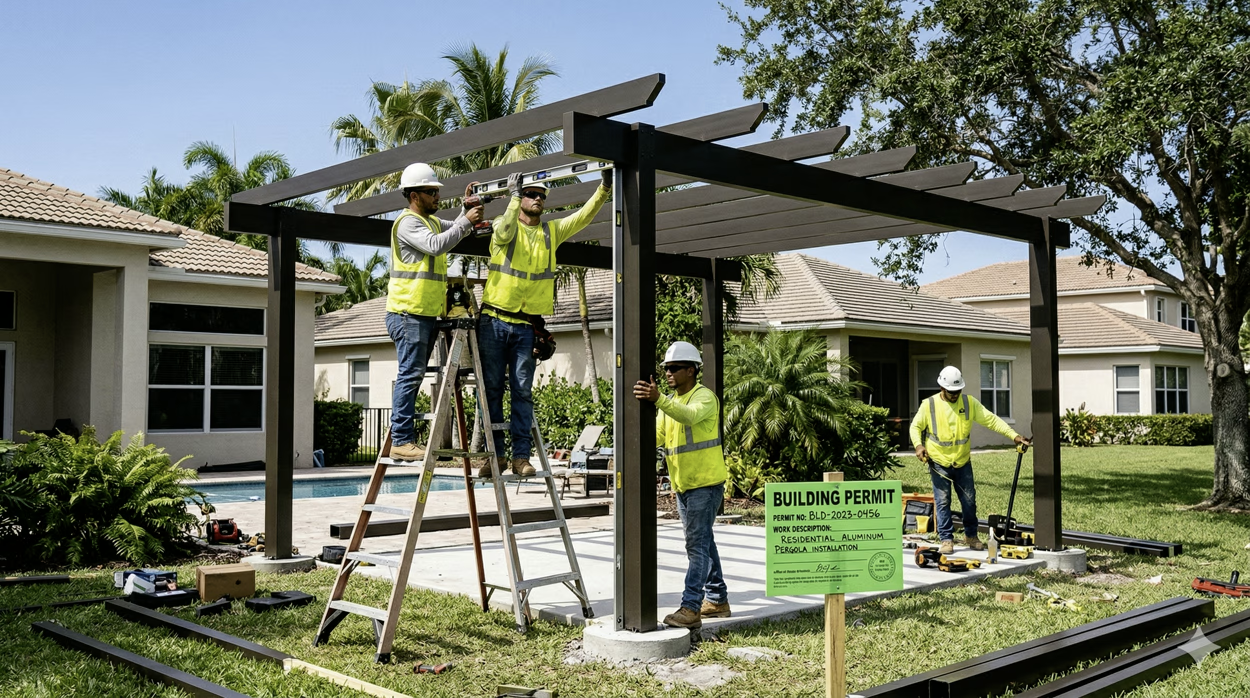
Yes — in almost every case, you do. If you're planning to install a pergola, patio cover, pool screen enclosure, or patio screen room in Miami-Dade, Broward, or Palm Beach County, a building permit is required by law. This is not a technicality — it's a real requirement that protects you, your family, and your home's value. Building without a permit in South Florida can result in fines, forced removal of the structure, and serious complications when you go to sell your home.
The good news: working with a licensed contractor like AB Aluminum & Screens means you never have to navigate this process alone. We manage every aspect of permitting on your behalf — from drawings to submission to final inspection. In this guide, we walk you through exactly what the permitting process looks like in each county so you know exactly what to expect.
Miami-Dade County enforces some of the strictest building codes in the United States — a legacy of Hurricane Andrew (1992) and the subsequent overhaul of Florida's construction standards. Any permanent outdoor structure, including pergolas, patio covers, screen enclosures, and pool cages, requires a building permit from the Miami-Dade Building Department.
What's typically required for a Miami-Dade permit application:
Typical approval timeline in Miami-Dade: 2 to 6 weeks depending on the complexity of the project and current permit office volume. Projects in incorporated municipalities (City of Miami, Coral Gables, Miami Beach, etc.) may require permits from the city rather than the county.
Broward County also requires building permits for all permanent outdoor structures. The Broward County Building Division oversees permitting for unincorporated areas, while incorporated cities (Fort Lauderdale, Pembroke Pines, Weston, Hollywood, etc.) handle their own permitting offices.
What's typically required for a Broward County permit application:
Typical approval timeline in Broward: 2 to 5 weeks. Weston, Pembroke Pines, and Fort Lauderdale all have active building departments with relatively efficient review processes.
Palm Beach County requires permits through the Palm Beach County Building Division for unincorporated areas. Incorporated cities like Boca Raton, Delray Beach, and West Palm Beach manage their own permitting offices. Requirements are generally similar to Miami-Dade and Broward.
Typical approval timeline in Palm Beach County: 2 to 4 weeks for straightforward projects.
Building an outdoor structure without a permit in South Florida is not just inadvisable — it can be genuinely costly. Here's what can happen:
The permitting timeline varies based on county, municipality, project complexity, and the current volume of applications at the building department. In general, expect the permitting phase of a pergola or screen enclosure project to take anywhere from 2 to 8 weeks. Your contractor should provide a realistic timeline based on local conditions and their experience with the specific building department handling your project.
At AB Aluminum & Screens, we have established relationships with building departments across Miami-Dade, Broward, and Palm Beach — which helps us navigate the process efficiently and avoid common delays.
We know that permit paperwork is the part of outdoor construction projects that homeowners dread the most. That's why we've built our process to take it completely off your plate. When you work with AB Aluminum & Screens, here's what we handle on your behalf:
You don't need to call the building department, fill out a single form, or wait in a permit office line. We do all of it — and we include this service as a standard part of every project we install.
In most South Florida jurisdictions, yes — even relatively small permanent structures require a permit. The threshold for what requires permitting varies by municipality, but any structure attached to your home or with a footprint over a certain size (often 100-120 square feet) will typically require a permit. Ask your contractor to confirm requirements for your specific city or county.
Florida law allows homeowners to pull their own permits as owner-builders. However, for structural projects like pergolas and screen enclosures, the permitting process involves engineering drawings, product approvals, and inspections that are complex to navigate without professional experience. Working with a licensed contractor who handles permitting is strongly recommended.
Yes. HOA approval and county permitting are two separate processes. Your HOA may require submission of design plans, material samples, or color selections before granting architectural approval — and this should ideally be secured before the county permit is submitted. AB Aluminum & Screens has extensive experience navigating HOA approvals across South Florida's gated communities.
Once installation is complete, a final inspection is required to close out the permit. Our team schedules and coordinates this inspection. After passing final inspection, the permit is officially closed and your project is fully compliant with local building codes.
Don't navigate permits alone — and don't risk building without them. Our licensed team manages the entire permitting process for pergolas, pool enclosures, patio covers, and screen rooms across Miami-Dade, Broward, and Palm Beach. Schedule your free in-home consultation today.
📞 Call us in English: (786) 383-6066
📞 Llámenos en español: (786) 340-5157
Serving Miami, Coral Gables, Weston, Pembroke Pines, Fort Lauderdale, Hollywood, Aventura, Boca Raton, and 30+ cities across South Florida.


