

Pool Enclosure Styles Explained: Mansard, Hip, Gable, Dome
A clear, no-pressure breakdown of the four main pool enclosure styles in South Florida: Mansard, Hip, Gable and Dome, with profiles, rain drainage and best uses for your yard.
Pool enclosure styles describe the roof shape of an aluminum pool cage, and the four most common in South Florida are Mansard, Hip, Gable and Dome. Each style sets the roofline profile, the screened ceiling height over the water, how rain sheds off the panels, and the overall look against your home. Choosing the right style keeps debris out and shapes how your patio feels every day.
What Are Pool Enclosure Styles?
A pool enclosure style is the shape of the screened roof on the structure surrounding your pool and deck. The walls are usually vertical, so the roofline is what changes between options.
The style you pick affects ceiling clearance over the water, how rain drains off the frame, sightlines to the sky, and how the cage relates to your roof. Across Miami-Dade, Broward and Palm Beach, drainage matters as much as appearance.
Why the Roof Shape Matters in South Florida
Heavy summer downpours are routine here, so a roofline that sheds water cleanly keeps debris and standing pools off the panels. Steeper styles drain faster, while a tall peak reads open and airy and a lower profile tucks the cage closer to the roofline.
What Is a Mansard Pool Cage?
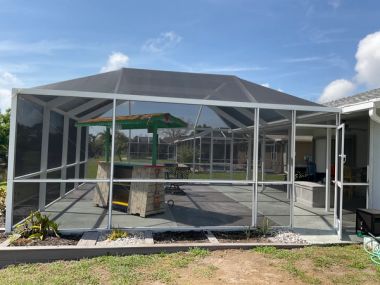
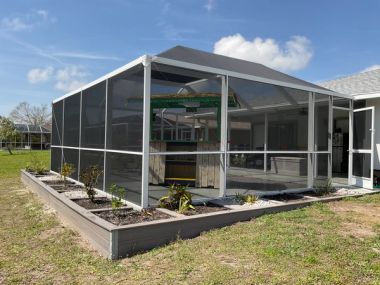
A Mansard pool cage has a flat center roof with the outer edges angled down toward the walls. That beveled perimeter is the signature look, giving a softer, finished edge instead of a hard box.
The angled sides help rain run off toward the gutters rather than pooling at the corners, and the flat middle keeps the height moderate, suiting homes where a very tall peak would look out of scale. Mansard cages are a frequent pick on larger rectangular decks in neighborhoods like Coral Gables and Pinecrest in Miami-Dade.
What Is a Hip Roof Pool Enclosure?
A hip roof pool enclosure slopes inward from all sides toward a central ridge, much like a hip roof on a house. There are no flat vertical ends; every side is angled, giving a balanced profile.
Because all four sides slope, rainwater drains evenly in every direction and the structure sheds wind smoothly. Hip styles suit square or near-square decks and homes with hip rooflines, and they are common across Broward communities such as Weston and Cooper City.
What Is a Gable Pool Screen?
A gable pool screen uses two sloped roof panels that meet at a central ridge, forming a peaked, A-frame profile with vertical triangular ends. It is the tallest and most open-feeling of the four common styles.
The steep pitch sheds rain quickly off both sides and creates generous headroom, so gable cages feel airy and bright. They fit larger pools, two-story homes and yards with gabled rooflines in Palm Beach areas like Wellington and Boca Raton.
What Is a Dome Pool Enclosure?
A dome pool enclosure uses a curved, rounded roofline rather than flat or angled panels. The continuous arch creates a distinctive silhouette and a high, open center.
The curve lets rain and wind flow smoothly across the surface with no flat sections to catch debris. Dome styles are less common but stand out where a softer, sculptural look is wanted, and they can mirror rounded or freeform pools. The form is specialized, so our team reviews each dome project individually.
Pool Enclosure Styles Compared
The table below summarizes how the four styles differ at a glance. Use it as a starting point, then weigh it against your deck size, home roofline and desired height.
StyleProfileBest ForNotes MansardFlat center with sloped outer edgesLarge rectangular decks; softer architectural lookModerate height; balanced edge drainage HipAll sides slope to a central ridgeSquare decks; homes with hip rooflinesEven all-around drainage; symmetrical look GableTwo slopes meeting at a peak (A-frame)Larger pools; two-story homes wanting heightTallest, most open; fast runoff both sides DomeCurved, rounded rooflineFreeform pools; unique sculptural profileSpecialized build; high central clearance
How Do You Choose the Right Pool Enclosure Style?
Start with your pool and deck shape: rectangular decks pair well with Mansard or Gable, square decks with Hip, and freeform pools sometimes suit Dome. The footprint narrows the field quickly.
Next, consider your home's roofline and the height you want. Matching the cage to the house ties the look together, while a taller peak opens the space. This checklist helps you compare the four styles.
- Deck shape: rectangular, square or freeform
- Height you want over the water, from low-profile to tall and open
- Your home's existing roofline and how the cage should match it
- Rain drainage and runoff during heavy summer storms
- Overall look: beveled, symmetrical, peaked or curved
- Deck size and the screened coverage area you need
- How visible the structure is from the house and street
- Wind behavior and attachment points for your specific site
Every enclosure we build is engineered to the Florida Building Code and, in Miami-Dade County, to the High-Velocity Hurricane Zone (HVHZ) wind load requirements. Specific ratings depend on the structure type, size and attachment, which we confirm per project.
If you are weighing a full pool cage against a simpler screened patio, our guide to patio screen enclosures in South Florida compares the options. You can also explore aluminum pool enclosure installation in South Florida on our pool enclosure page.
Still unsure which profile fits? Schedule My Free 3D Design Consultation and we will model your choices on your deck. Call (786) 383-6066 (English) or (786) 340-5157 (Espanol).
See Your Style in 3D Before You Build
The clearest way to compare Mansard, Hip, Gable and Dome is to see them on your home. We render your pool enclosure in 3D so you can walk through the design before we cut a single piece of aluminum.
Every project includes a custom 3D design with materials, permits and precision planning, and we quote real numbers from that design rather than brochure estimates. Our bilingual team pulls the permits, schedules inspections and installs with our own crew.
Schedule My Free 3D Design Consultation today. Call (786) 383-6066 (English) or (786) 340-5157 (Espanol) to get started across Miami-Dade, Broward and Palm Beach.
Frequently Asked Questions
Which pool enclosure style is best for South Florida?
There is no single best style; it depends on your deck shape, home roofline and desired height. Mansard and Hip suit moderate profiles, Gable adds open height, and Dome offers a curved look. A free 3D design helps you compare them on your home.
What is the difference between a Mansard and a Hip pool cage?
A Mansard cage has a flat center roof with sloped outer edges, giving a moderate, beveled profile. A Hip roof slopes inward on all sides to a central ridge, creating a symmetrical, pyramid-like shape with even all-around rain drainage.
Are aluminum pool enclosures hurricane rated?
They are engineered to the Florida Building Code and, in Miami-Dade County, to HVHZ wind load requirements where applicable. The specific rating depends on the structure type, size and attachment, so we confirm it for each project rather than promising it withstands every storm.
Which style gives the most height over the pool?
A Gable style is typically the tallest, with two slopes meeting at a central peak for an open, airy ceiling. Dome enclosures also offer high central clearance through their curved roofline. Both feel more open than Mansard or Hip profiles.
Can I match my pool enclosure to my home's roofline?
Yes. Many homeowners choose a Hip cage for a hip-roofed house or a Gable cage for a gabled home so the structure ties into the architecture. We review your roofline during the 3D design stage across South Florida.
Do all pool enclosure styles drain rain the same way?
No. Steeper styles like Gable and Dome shed heavy South Florida rain quickly, while Mansard drains at its sloped edges and Hip drains evenly on all sides. Drainage is one reason roof shape matters as much as appearance here.