

Pool Enclosure vs. Screen Room: Which Does Your Yard Need?
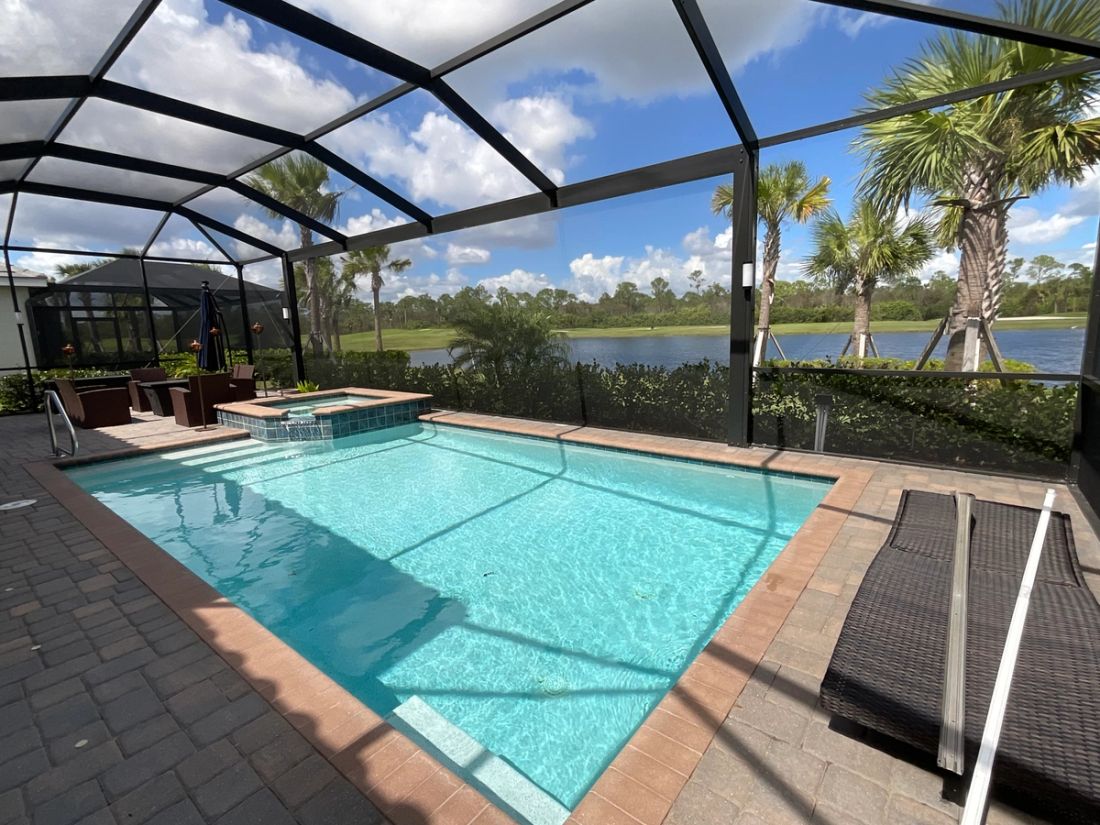
A pool enclosure cages your pool against debris and bugs, while a screen room is an attached living space off the house. Here is how to choose for your South Florida home and yard.
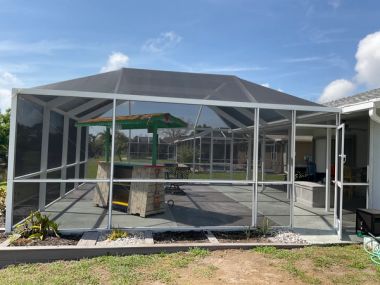
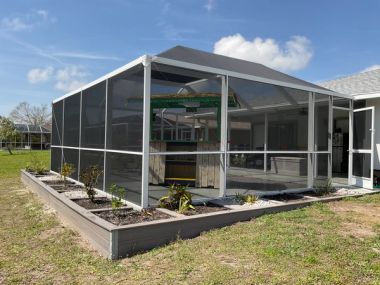
A pool enclosure and a screen room solve different problems. A pool enclosure, or pool cage, is an aluminum frame screened over your pool to block leaves, insects, and pests. A screen room is an enclosed, roofed space attached to the house for lounging or dining. In the pool enclosure vs screen room choice, the deciding factor is whether you want to protect a pool or add living space in Miami-Dade, Broward, or Palm Beach.
Pool Enclosure vs. Screen Room: The Short Answer
The fastest way to settle the pool cage vs screen room question is to ask what you are covering. A pool enclosure wraps an aluminum-and-screen structure over the pool itself, keeping the water and deck clean.
A screen room encloses a patio or porch attached to the home as a sheltered seating area. Both are built only in powder-coated aluminum and engineered to the Florida Building Code, but one guards your swimming area and the other is a screened room to relax in. On larger lots in Weston or Pinecrest, we sometimes design both as one connected plan.
What Is a Pool Enclosure (Pool Cage)?
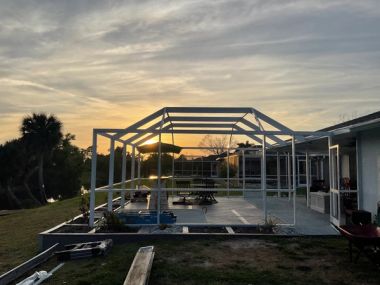
A pool enclosure is a tall aluminum frame fitted with screen panels that sits over your pool and the surrounding deck. You swim inside the screened volume rather than entering a separate room, and the shape rises overhead in styles such as Mansard, Hip, Gable, or Dome.
Its main job is protection. The mesh blocks falling leaves, palm debris, mosquitoes, no-see-ums, frogs, and lizards, which means far less skimming and a cleaner pool. It anchors to the pool deck, so placement follows the pool footprint, not the floor plan.
What Is a Screen Room?
A screen room is an enclosed, roofed space, usually attached to the back or side of the house, with screen walls instead of solid walls. You step into it like a room: a defined floor, a covered roof, and a doorway, often off a lanai or patio.
The purpose is living space, not pool protection. It gives you a shaded, bug-free spot for a dining set, lounge furniture, or an outdoor kitchen. Layouts include lanai, wrap-around, and attached, with standard, no-see-um, pet-resistant, or hurricane-rated mesh chosen for the site.
Pool Enclosure vs. Screen Room: Side-by-Side Comparison
The table below lines up the two structures on the points that matter most. Use it as a quick reference, then read the sections that follow for the detail behind each row.
FeaturePool Enclosure (Pool Cage)Screen Room Primary purposeProtect the pool and deck from debris and pestsAdd a screened living or dining space LocationOver and around the poolAttached to the house, over a patio or lanai EnclosesThe pool and surrounding deckA floored room you walk into RoofScreen panels, often peakedSolid or screened roof over the space Typical useSwimming, cleaner water, safetyLounging, dining, outdoor kitchen Cost driverPool size and enclosure heightRoom footprint and roof type Best whenThe pool is the focus of the yardYou want more usable outdoor room
How Do They Differ in Daily Use and Upkeep?
With a pool enclosure, the experience is about the pool: you swim and lounge poolside inside the screened volume, with cleaner water and fewer bugs, though the deck stays a deck rather than a furnished room.
With a screen room, the experience is about the room. You furnish it and use it as an extension of the living area, but it does not cover a pool, so it will not keep swimming water clean on its own.
Upkeep differs in scale. A pool cage has a larger screened surface exposed to weather, so rinsing panels and checking fasteners are routine, while a screen room is smaller and more contained.
Repair and Rescreening
Over time, screen panels on either structure can tear or loosen and may need rescreening rather than full replacement. We handle pool cage repair and rescreen work as well as new builds, so an aging enclosure does not always mean starting over.
What Do They Cost in South Florida?
There is no flat price for either project. Pool enclosure cost is driven mainly by the pool footprint, enclosure height, roof style, and mesh, so a larger or taller cage needs more material. Screen room cost tracks the room footprint, roof type, and any add-ons.
Because every yard, pool, and home differs, your exact number comes from a free 3D design. We render the enclosure or room so you can walk through it, then quote real figures, not a brochure estimate.
Do You Need a Permit and Wind-Load Engineering?
Yes. Both pool enclosures and screen rooms are permitted aluminum structures across South Florida, engineered to the Florida Building Code and, in Miami-Dade County, to the High-Velocity Hurricane Zone (HVHZ) wind-load requirements where applicable.
The specific rating depends on the structure type, size, and attachment, so two projects on the same street can carry different ratings. We pull the permits, schedule inspections, and install with our own crew.
Which One Does Your Backyard Need?
Choose a pool enclosure if your priority is a cleaner, safer, lower-maintenance pool and the pool is the heart of the yard. It is the answer for homeowners in Palm Beach County and Broward County tired of skimming leaves every morning. Choose a screen room if your priority is more usable outdoor living space attached to the house.
- You want cleaner, debris-free pool water: pool enclosure.
- You want a screened dining or lounge room off the house: screen room.
- You want pool safety and reduced unsupervised access: pool enclosure.
- You want to extend living space without a solid addition: screen room.
- You want shade and bug protection over a patio: screen room.
- You want less daily pool skimming and cleaning: pool enclosure.
- You want an outdoor kitchen sheltered from insects: screen room.
- You have a large lot and want both functions: a combined design.
Plan Your Project With a Free 3D Design
Still weighing screen room vs pool enclosure for a property in Weston, Pinecrest, or Boca Raton? Schedule My Free 3D Design Consultation and we will render either structure in 3D so you can walk through the design before we cut a single piece of aluminum.
Explore our pool screen enclosure installation in South Florida to see cage styles, or compare our patio screen room enclosures across South Florida. Both are backed by 15+ years of experience and financing through Synchrony Bank.
Schedule My Free 3D Design Consultation today. Call (786) 383-6066 (English) or (786) 340-5157 (Espanol) and our bilingual, licensed and insured team will help you choose between a pool enclosure and a screen room.
Frequently Asked Questions
What is the difference between a pool enclosure and a screen room?
A pool enclosure is an aluminum-and-screen cage built over your pool to keep out debris and bugs. A screen room is an enclosed, roofed space attached to the house for lounging or dining. One protects a pool; the other adds living space.
Which is better, a pool enclosure or a screen room?
It depends on your goal. A pool enclosure is better for cleaner, safer swimming; a screen room is better when you want a screened-in living area. Many South Florida homes benefit from both.
Can a screen room go over a pool like a pool cage?
Not in the same way. A screen room is an attached, floored living space, not a tall cage over water. To screen a pool, you need a pool enclosure engineered for that footprint and height.
Do both pool enclosures and screen rooms need a permit in South Florida?
Yes. Both are permitted aluminum structures engineered to the Florida Building Code, and in Miami-Dade to HVHZ wind-load requirements where applicable. We handle the permits and inspections.
Which costs more, a pool enclosure or a screen room?
There is no fixed answer; both are priced from your actual layout. Pool enclosure cost depends on pool size and cage height, while screen room cost depends on footprint and roof type. Your exact number comes from a free 3D design.