
NOA Approvals: What They Are and Why They Matter in Florida
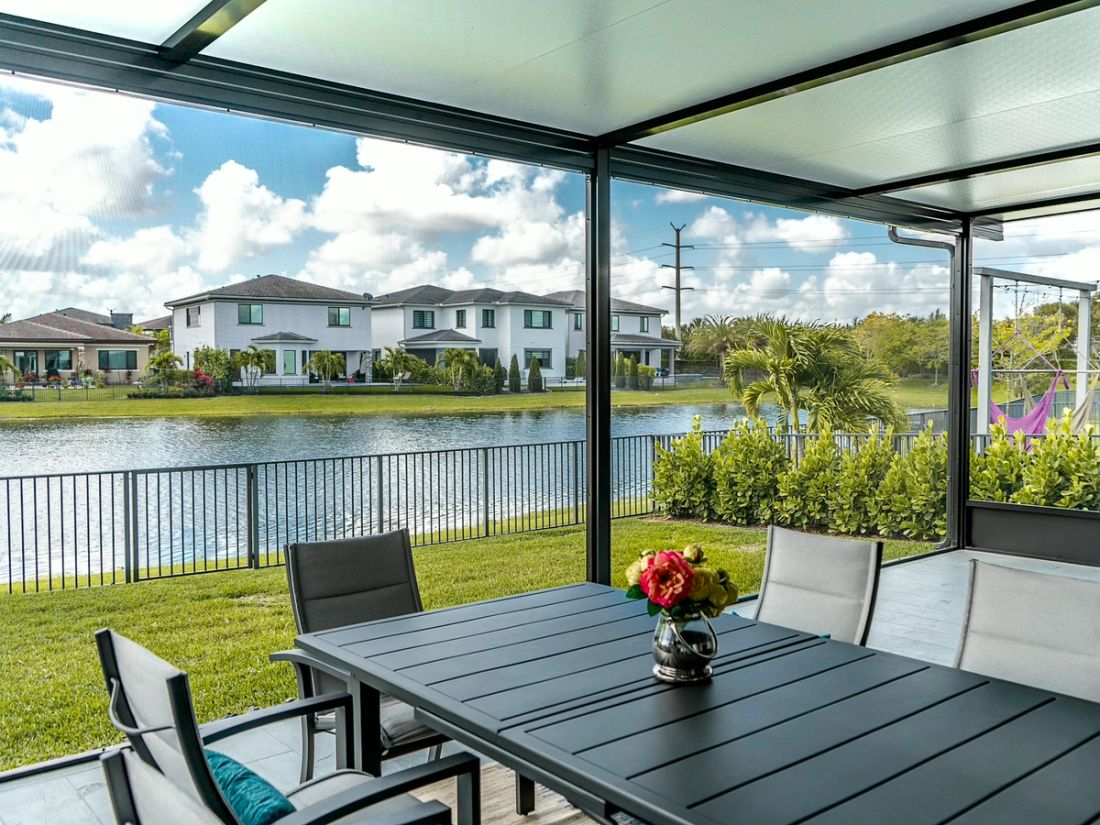
A NOA, or Notice of Acceptance, is a Miami-Dade product approval that proves a building component meets Florida wind-load code. Here is why it matters for your outdoor project.
A NOA approval in Florida is a Notice of Acceptance issued by Miami-Dade County that certifies a building product meets the wind-load and impact standards of the Florida Building Code. For aluminum outdoor structures like pergolas and pool enclosures, a valid NOA tells your building department, and you, that the exact components used were tested and accepted for your specific area.
If you are planning an aluminum pergola, patio cover, or pool enclosure in South Florida, you have probably seen NOA on a quote or permit set. It is one of the most misunderstood documents in the process, yet it can decide whether your project passes.
What Is a NOA (Notice of Acceptance)?
A Notice of Acceptance is a document issued by the Miami-Dade County Product Control Section. It states that a specific product, from a named manufacturer, has been tested and approved under the Florida Building Code. Each NOA carries a number, an expiration date, and a list of approved uses.
In plain terms, a NOA is a product approval, not a sign-off on your individual backyard. It certifies the part itself, the aluminum extrusion, the screen, the fasteners, so a building official can confirm the material is code-compliant before your permit is approved.
Who Issues a NOA and Why It Carries Weight
Miami-Dade County runs one of the most demanding product-testing programs in the country. Because its standards are so strict, a Miami-Dade NOA is widely respected across Florida and often accepted elsewhere as proof a product can handle high-wind conditions.
How a NOA Relates to the Florida Building Code
The Florida Building Code sets the minimum wind-load, structural, and product standards for everything built in the state. A NOA is one recognized way a product shows it meets those standards. Think of the code as the rulebook and the NOA as the receipt proving a product follows it.
NOAs and the High-Velocity Hurricane Zone (HVHZ)
Miami-Dade and Broward counties sit inside the High-Velocity Hurricane Zone, the HVHZ, where wind-load requirements are the strictest in Florida. Products used here generally need HVHZ-tested approvals, and a Miami-Dade NOA is a common way to show that.
Here is the honest nuance: an NOA does not make any structure able to survive every hurricane. It confirms a product was tested to specific load criteria. Real-world performance depends on size, attachment method, and add-ons, which is why engineering is project-specific.
Why a NOA Matters for Your Outdoor Project
A valid NOA is not red tape for its own sake. It protects your investment, your permit timeline, and your ability to insure or sell the home later. Skipping it is one of the costliest shortcuts on an outdoor build.
Here is why the NOA on your aluminum project matters:
- Permit approval: building departments in Miami-Dade County and beyond check NOAs before issuing a permit.
- Inspection sign-off: an inspector can reject work built with non-approved or expired-NOA products.
- Wind-load compliance: the NOA documents the loads a product was tested to under the Florida Building Code.
- HVHZ eligibility: in the High-Velocity Hurricane Zone, approved products are typically required.
- Insurance and claims: insurers may ask for proof of code-compliant materials after a storm.
- Resale and disclosure: a buyer's inspector may flag structures built without permits or approvals.
- Manufacturer accountability: a NOA ties your components to a tested, named product, not unverified parts.
- Peace of mind: you know the aluminum, screen, and fasteners were accepted for your county.
Not sure whether your project's products carry the right approvals? Schedule My Free 3D Design Consultation and we will confirm it. Call (786) 383-6066 (English) or (786) 340-5157 (Espanol) to reach our licensed team in Miami-Dade, Broward, and Palm Beach County.
How a NOA Affects Permits and Inspections
During permitting, your contractor submits engineered drawings that reference the NOAs for the products being installed. The plan reviewer confirms each approval is current and applies to your structure type, whether that is a louvered roof, a screen room, or a patio cover.
Do NOAs Expire?
Yes. Every Notice of Acceptance has an expiration date and is periodically renewed or replaced by the manufacturer. A NOA valid at launch may be outdated by the time you build, so your contractor should always pull the current version for your permit set.
What to Ask Your Contractor About NOAs
You do not need to become a code expert. You need a contractor who treats NOAs as standard practice. In premium markets like Coral Gables, Pinecrest, and Weston, where inspections are thorough, this paperwork discipline separates a smooth project from a stalled one.
Bring these questions to your consultation before committing to any aluminum outdoor structure:
- Which products on this project carry a current Miami-Dade NOA?
- Will the NOA numbers and engineering be included in my permit package?
- Are the approved uses on each NOA a match for my structure type and size?
- Who pulls the permit and schedules the inspections, your crew or a subcontractor?
- How do you handle wind-load engineering for my specific attachment and add-ons?
At AB Aluminum & Screens, permits, engineering, and installation are handled by one accountable, licensed and insured team. We pull permits, schedule inspections, and install with our own crew, so the NOA documentation and the build always line up.
Does Getting a NOA Add to My Project Cost?
The NOA itself is the manufacturer's approval, not a separate fee you pay per project. The real cost drivers are size and footprint, motorization, lighting and control packages, mesh type, and the wind-load engineering required for your attachment and location.
Because every backyard is different, there is no honest flat price for a code-compliant outdoor structure. Your exact number comes from a free 3D design, where we quote real figures, not brochure estimates, and confirm the approvals your project needs.
Build It Right the First Time
Want a pergola, patio cover, or pool enclosure that sails through permitting in Miami-Dade, Broward, or Palm Beach County? We render your project in 3D so you can walk through the design before we cut a single piece of aluminum, with the right approvals built in.
Schedule My Free 3D Design Consultation today at (786) 383-6066 (English) or (786) 340-5157 (Espanol). Explore our aluminum pergola installation in South Florida or see how a code-compliant pool screen enclosure protects your backyard.
Frequently Asked Questions
What is a NOA approval in Florida?
A NOA, or Notice of Acceptance, is a Miami-Dade County product approval certifying that a building product meets the Florida Building Code's wind-load and impact standards. It is widely accepted across Florida as proof a product was tested for high-wind conditions.
Is a NOA the same as a building permit?
No. A NOA approves the product itself, such as an aluminum extrusion, screen, or fastener. A building permit approves your specific project. Your permit application references the NOAs for the products being installed, but the two are separate documents.
Do I need a Miami-Dade NOA if I live in Broward or Palm Beach?
Often, yes. Miami-Dade NOAs are respected statewide and are commonly accepted in Broward County and Palm Beach County as evidence of code compliance. Broward also sits in the HVHZ, so high-wind approvals are typically expected there too.
Does a NOA mean my aluminum structure will survive any hurricane?
No. A NOA confirms a product was tested to specific load criteria under the Florida Building Code. No outdoor structure can be promised to survive every storm. Real-world performance depends on size, attachment method, and add-ons, which is why engineering is always project-specific.
Can I build an aluminum pergola or pool enclosure without a NOA?
You should not. Building with non-approved products can cause failed inspections, stop-work orders, fines, and insurance problems. A licensed contractor uses NOA-approved products and includes the approvals in your permit package as standard practice.